

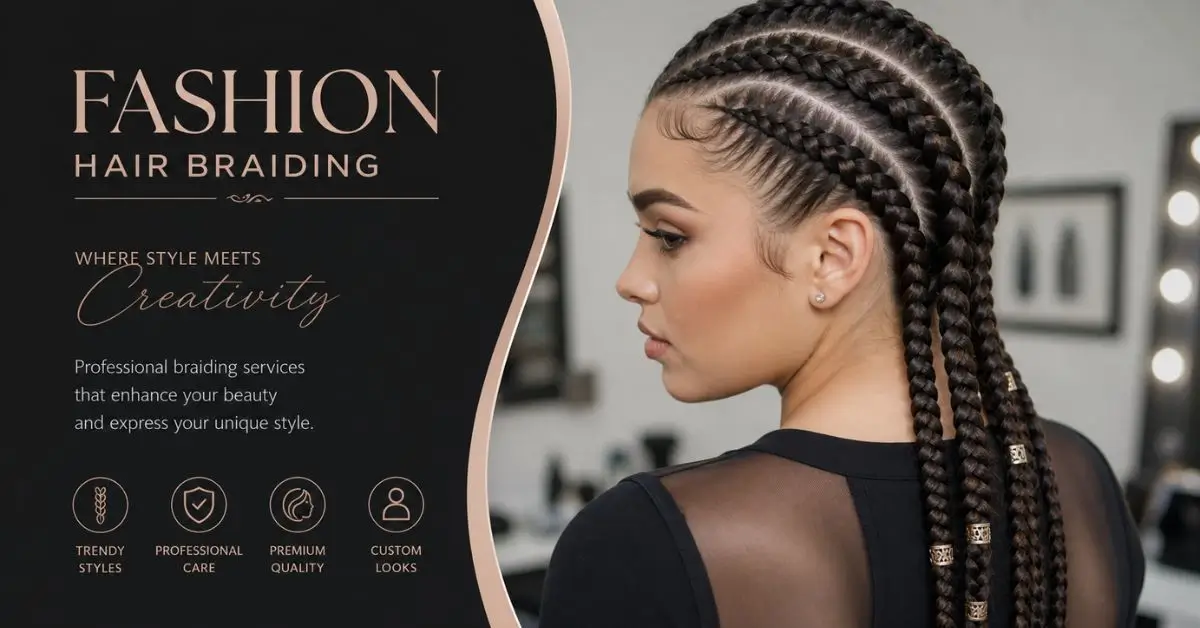
Fashion Hair Braiding: Styles, Trends, and Everything You Need to Know
Braids have never really gone out of style — but right now, they are having a genuine fashion moment. From runways in New York and London to everyday street style across the US, braided hairstyles are showing up everywhere and in more creative forms than ever before.
The challenge most people face is not finding braid inspiration. It is finding information that actually helps — the right style for their hair type, how long a style will last, what level of skill or professional help is needed, and how to keep braids looking good after they are done.
This guide covers all of it. Whether you are new to braiding or looking to update your current style, you will find clear, practical information on the most popular braiding styles, what is trending right now, and how to make braids work for your hair and lifestyle.
Fashion hair braiding refers to the art and practice of weaving sections of hair into structured, decorative patterns for both aesthetic and functional purposes. It spans a wide range of techniques — from simple three-strand plaits to complex protective styles like box braids and cornrows — and has deep roots in global hair culture while remaining one of the most versatile and enduring trends in modern fashion.
Quick Summary
Braided hairstyles are a major fashion trend with deep cultural roots and serious staying power. This guide covers the most popular styles, current trends, what works for different hair types, and how to care for braids properly — all in plain, practical language.
Why Braids Are a Fashion Staple Right Now
Hair braiding is not a new trend — it is one of the oldest forms of personal styling in human history. Archaeological evidence shows braided hairstyles dating back thousands of years across African, Asian, and European cultures. What makes braids a fashion topic worth covering today is how they have evolved from traditional practice into a full-blown global style statement.
Major fashion houses have put braids on the runway repeatedly in recent seasons. Celebrities from Beyoncé to Zendaya have made intricate braided looks front-page news. Social media platforms — especially TikTok and Instagram — have accelerated the spread of braiding tutorials and inspiration to a massive global audience.
The result is a fashion hair braiding culture that is more visible, more creative, and more inclusive than at any previous point. Braids are being worn at red carpet events, in professional offices, at casual weekend outings, and everywhere in between.
The Most Popular Braiding Styles Right Now
Box Braids
Box braids are one of the most recognized and widely worn protective styles in fashion today. They involve sectioning the hair into square or rectangular parts and braiding each section from the root, typically with added hair extensions to achieve length and fullness.
They can be worn short, mid-length, or extremely long. They can be thin and delicate or thick and bold. The versatility is a big part of their appeal.
Box braids are particularly popular because they are a protective style — meaning they protect natural hair from daily manipulation, heat, and environmental damage. For women with natural hair in cities like Atlanta or Houston, box braids are both a fashion choice and a practical hair care strategy.
Installation by a professional typically takes four to eight hours depending on length and thickness. They can last six to eight weeks with proper care.
Cornrows
Cornrows are flat braids that run along the scalp in continuous rows. They are one of the oldest and most culturally significant braiding techniques, with origins in African hair culture that span thousands of years.
In modern fashion, cornrows appear in everything from simple straight-back patterns to elaborate geometric designs that are genuinely artistic. High-fashion editorials frequently feature intricate cornrow patterns that take skilled stylists hours to create.
For everyday wear, straight-back cornrows are clean, practical, and work well under wigs or head wraps. For fashion-forward looks, curved, zigzag, or patterned cornrow designs make a strong style statement on their own.
Knotless Box Braids
Knotless box braids have largely replaced traditional box braids as the preferred choice for many natural hair wearers — and for good reason.
The key difference is how they start. Traditional box braids begin with a knot at the root, which creates immediate tension and can cause scalp discomfort or even damage over time. Knotless braids start with your own natural hair and gradually incorporate extension hair further down, which significantly reduces tension at the root.
The result is a style that feels more comfortable, causes less stress on the hairline, and still looks as full and polished as traditional box braids. For anyone who has experienced scalp soreness from conventional braiding, knotless braids are worth the try.
French and Dutch Braids
French and Dutch braids are among the most accessible styles for people with straight, wavy, or loosely textured hair who want to try braiding at home.
A French braid is created by adding sections of hair to a three-strand braid as you work from the crown toward the nape. The result is a smooth, woven look that lies flat against the head. A Dutch braid works the same way but crosses sections under rather than over, creating a raised, three-dimensional effect.
Both styles have experienced a major fashion revival in recent years. Double Dutch braids — often called boxer braids in fashion circles — became a major trend and have remained popular because they work on multiple hair types and suit everything from gym sessions to formal events.
Feed-In Braids
Feed-in braids are a modern technique that creates a more natural, tapered look compared to traditional methods. Instead of attaching a full bundle of extension hair at the root, the stylist gradually feeds in small amounts of hair as the braid progresses. This creates a style that starts slim at the hairline and fills out gradually.
The result looks significantly more realistic and puts less stress on the edges — which is one of the most vulnerable areas of the hairline, especially for women who wear protective styles frequently.
Feed-in braids are particularly popular for cornrow-based styles and ponytail designs where a natural-looking base is important.
Fishtail Braids
The fishtail braid creates a distinctly different visual texture compared to a standard three-strand braid. It is made by splitting the hair into two sections and pulling small pieces from the outside of each section to join the other, alternating sides as you work down.
The result is an intricate, woven pattern that looks far more complex than it actually is. For fashion purposes, fishtail braids work beautifully for formal occasions — weddings, events, photo shoots — and are a favorite among bridal hairstylists.
They do take more time than a standard braid, but the visual payoff is significant.
Current Braiding Trends in Fashion
Fashion hair braiding trends shift seasonally, but several styles have shown real staying power in recent years.
Jumbo braids are having a major moment. Thick, oversized braids — particularly jumbo box braids — have moved firmly into mainstream fashion and are celebrated for their bold, confident aesthetic.
Beads and accessories are being added to braids at every level — from simple wooden beads at the ends of box braids to gold cuffs, shells, and ribbons woven throughout the style. Accessories transform a standard braid into a fully styled fashion look.
Half-up braided styles combine loose hair with braided sections at the crown or sides. This approach works well for people who want the fashion impact of braids without committing to a full braided style.
Color in braids is also a significant trend. Ombre extension hair, bold single colors like burgundy or platinum, and subtle highlights added through the braids themselves are all popular choices that allow for creative expression within braided styles.
Choosing the Right Braid Style for Your Hair Type
Not every style works equally well on every hair type. Here is a practical guide:
| Hair Type | Works Well With | Avoid |
|---|---|---|
| Type 4 natural hair | Box braids, cornrows, knotless braids, feed-in braids | Tight styles on fragile edges |
| Type 3 curly hair | Dutch braids, feed-in braids, fishtail braids | Very long heavy extensions |
| Type 2 wavy hair | French braids, fishtail braids, half-up styles | Styles requiring very tight grip |
| Type 1 straight hair | French braids, Dutch braids, fishtail braids | Heavy extension styles without support |
The honest advice here is that the right style depends not just on your hair type but on your hair’s current health, your scalp sensitivity, and how long you want to maintain the look.
How to Care for Braided Styles
Getting braids installed is only half the process. How you care for them determines how long they last and how healthy your hair remains underneath.
Keep your scalp moisturized. Braids can make it easy to forget about your scalp entirely — but a dry, itchy scalp is uncomfortable and can lead to flaking and irritation. Use a lightweight scalp oil or braid spray every few days to keep the scalp hydrated without causing buildup.
Protect your braids at night. Sleeping without any protection causes friction that frizzes braids quickly and shortens their lifespan. Use a satin or silk bonnet or sleep on a satin pillowcase to maintain the style overnight.
Wash carefully. Braids can and should be washed — letting them go too long without cleaning leads to product buildup and scalp issues. Dilute a gentle shampoo in water and apply it directly to the scalp, squeezing gently rather than scrubbing. Follow with a lightweight conditioner on the length.
Do not keep them in too long. Most braided styles should be removed after six to eight weeks maximum. Leaving them in longer causes your shed hairs to tangle with the braid at the root, which can lead to breakage during removal. Give your hair time to breathe between installs.
DIY vs. Professional Braiding: What to Know
Some braiding styles are genuinely achievable at home with practice. French braids, Dutch braids, and fishtail braids are all learnable through video tutorials and patient practice. If your hair is straight or wavy, these styles are particularly manageable.
Protective styles like box braids, knotless braids, and cornrows with extension hair are a different story. Installing these correctly — with even tension, clean parts, and a secure foundation — takes significant skill. Done incorrectly, they can cause traction alopecia, a form of hair loss caused by consistent pulling at the hairline and roots.
For any style involving extension hair or tight scalp braiding, a professional braider is worth the investment. In major US cities, professional braiding services typically range from $100 to $300 depending on the style and complexity.
Frequently Asked Questions
What is the most popular braiding style?
Box braids and knotless box braids are among the most popular styles, offering versatility and a protective hairstyle with less scalp tension.
How long do braided hairstyles last?
Most braids last 4–8 weeks with proper care, including regular moisturizing and nighttime protection.
Can braiding damage your hair?
Yes, if braids are too tight or left in too long. Proper installation and maintenance help prevent damage.
Which braids are best for fine or straight hair?
French, Dutch, and fishtail braids work best, as they suit finer hair without adding excessive weight.
How much does professional hair braiding cost?
In the US, prices typically range from $100–$300+, depending on the style, length, and location.